Sacci BCI records highest average reading since 2013, but broad-based traction still elusive

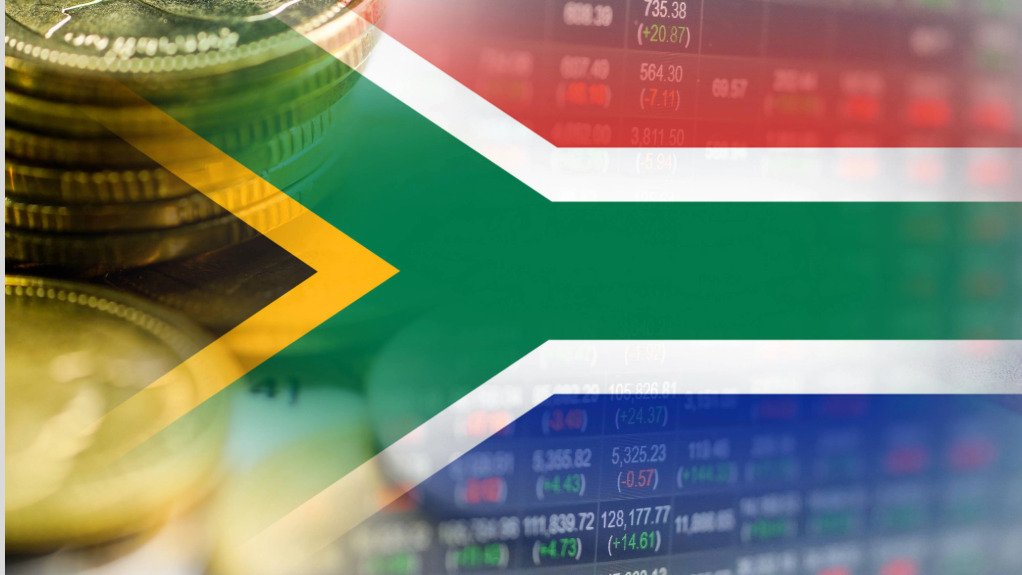



Business organisation the South African Chamber of Commerce and Industry’s (Sacci’s) Business Confidence Index (BCI) averaged at 121.7 for 2025, which is the highest annual average recorded since 2013 when the BCI measured 122.2.
The BCI declined slightly in January, but still recorded a healthy level of 131.4. The January BCI was 11.4 index points higher than in January 2025, but 1.8 index points lower than in December 2025.
The BCI dipped to 113.2 in June 2025, but then recovered strongly from August to reach 133.2 in December 2025.
“The exceptional increase in business confidence towards year-end in 2025 and into 2026 provides an important opportunity to convert positive business sentiment into real action. It is important that all spheres of the public sector deliver on practical service delivery,” Sacci recommends.
However, this high level of the business confidence index was not the result of a broad-based improvement in the business climate. The year-on-year improvement was notably the result of particularly strong increases in overseas tourists, high global precious metal prices, share prices on the JSE and new-vehicle sales, Sacci says.
These increases were, to a large extent, affected by uncertain global economic conditions, positive financial market developments and easier local financial conditions, it adds.
Between December 2025 and January, three of the 14 BCI subindices, namely, manufacturing, merchandise export volumes and the number of new vehicles sold, negatively impacted on the business climate.
Five subindices supported a positive business climate and six subindices had a neutral effect.
By far the most positive short-term effect mirrored by business versatility was the increase in merchandise import volumes made easier by the strong performance of the rand against major trading currencies.
High precious metal prices also flowed over into higher share prices on the JSE.
However, the passiveness of notably real economic subindices is of concern, Sacci says.
Month-on-month, the broad financial climate was leaning towards a positive business climate.
Real economic activity was, however, uneasily balanced and negatively orientated, it adds.
Over the medium term, or year-on-year, the subindices on the financial environment were in support of an improved business climate and augmented by real economic activity with only one subindex, namely export volumes, pointing south.
UPCOMING BUDGET
Meanwhile, Sacci states that Budget 2026, to be presented by Finance Minister Enoch Godongwana on February 25, presents an opportunity because time is running out for structural economic policy adjustments that could attract local and foreign fixed investment.
Budget 2026 will be an important occasion, given this intersection in global and local economic developments.
Where the Medium Term Budget Policy Statement, presented in November 2025, gave an overview of the spending priorities of the consolidated national government, provincial governments and social security funds, the Budget’s main emphasis is on the revenue side.
The Budget is also an important statement with regard to government economic policy and investor assurance, the chamber adds.
“South Africa’s economic contradiction is best illustrated by the survey in the BCI in the second half of 2025 and continuing subdued real economic performance.
“The relatively lower level of the coincident indicator to the leading indicator and the BCI confirms and captures the mismatch between real economic performance and perceptions affecting the business climate.
“The challenge remains to bridge the present gap between perceptions and actual economic performance,” it says.
Part of converting positive market and financial developments into real economic performance is by way of fixed investment to achieve a desired capital stock level that enhances real activity, adds Sacci.
A general rule is that a fixed investment rate of 25% of GDP should support 3% sustainable real yearly growth.
A further important aspect is the financial source of fixed investment, given South Africa’s difficulty in generating enough domestic savings to finance the needed fixed investment rate of 25% of GDP.
It is of critical importance to create the applicable investor confidence through economic policy that attracts foreign capital for longer-term fixed investment, Sacci says.
Further, while about 69% of foreign direct investment is from Europe and the US, and Europe and the US together account for 66% of foreign indirect investment, only 34% of foreign loans are from Europe and the US.
Article Enquiry
Email Article
Save Article
Feedback
To advertise email advertising@creamermedia.co.za or click here
Research Reports

Projects
Latest Multimedia
Latest News


Showroom
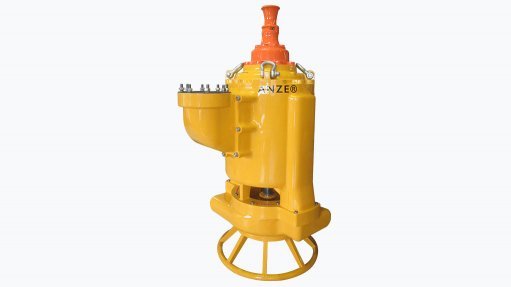
Goodwin Submersible Pumps Africa is sole distributors for Goodwin electrically driven, submersible, abrasion resistance slurry pumps.
VISIT SHOWROOM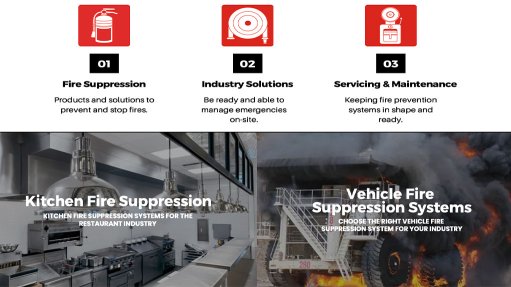
Established on 1 March, 2000, by Barries Barnard, Advanced Fire Suppression Technologies (AFST) and the Advanced Group stands as Sub-Saharan...
VISIT SHOWROOM


Press Office
Announcements
What's On
Subscribe to improve your user experience...
Option 1 (equivalent of R125 a month):
Receive a weekly copy of Creamer Media's Engineering News & Mining Weekly magazine
(print copy for those in South Africa and e-magazine for those outside of South Africa)
Receive daily email newsletters
Access to full search results
Access archive of magazine back copies
Access to Projects in Progress
Access to ONE Research Report of your choice in PDF format
Option 2 (equivalent of R375 a month):
All benefits from Option 1
PLUS
Access to Creamer Media's Research Channel Africa for ALL Research Reports, in PDF format, on various industrial and mining sectors
including Electricity; Water; Energy Transition; Hydrogen; Roads, Rail and Ports; Coal; Gold; Platinum; Battery Metals; etc.
Already a subscriber?
Forgotten your password?
Receive weekly copy of Creamer Media's Engineering News & Mining Weekly magazine (print copy for those in South Africa and e-magazine for those outside of South Africa)
➕
Recieve daily email newsletters
➕
Access to full search results
➕
Access archive of magazine back copies
➕
Access to Projects in Progress
➕
Access to ONE Research Report of your choice in PDF format
RESEARCH CHANNEL AFRICA
R4500 (equivalent of R375 a month)
SUBSCRIBEAll benefits from Option 1
➕
Access to Creamer Media's Research Channel Africa for ALL Research Reports on various industrial and mining sectors, in PDF format, including on:
Electricity
➕
Water
➕
Energy Transition
➕
Hydrogen
➕
Roads, Rail and Ports
➕
Coal
➕
Gold
➕
Platinum
➕
Battery Metals
➕
etc.
Receive all benefits from Option 1 or Option 2 delivered to numerous people at your company
➕
Multiple User names and Passwords for simultaneous log-ins
➕
Intranet integration access to all in your organisation